Pleurisy
One of the most common conditions found in Scottish slaughter pigs. It costs producers and processors money and it affects pig welfare.
What is pleurisy?
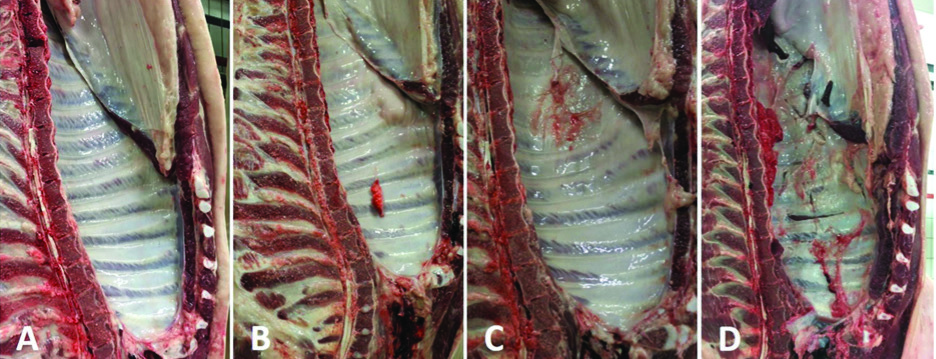
The pleura is a thin double membrane that lines the chest cavity and covers the lungs. It lets the lungs slide smoothly against the ribs as the pig breathes. Pleurisy is inflammation of this membrane.
The most common form in pigs is fibrinous pleurisy. Fluid and fibrin build up between the layers, and the lung can become stuck to the chest wall. In people, pleurisy causes sharp pain when breathing deeply. There is no reason to think pigs feel it differently, and they breathe around 27–34 times a minute.
Pleurisy in Scotland
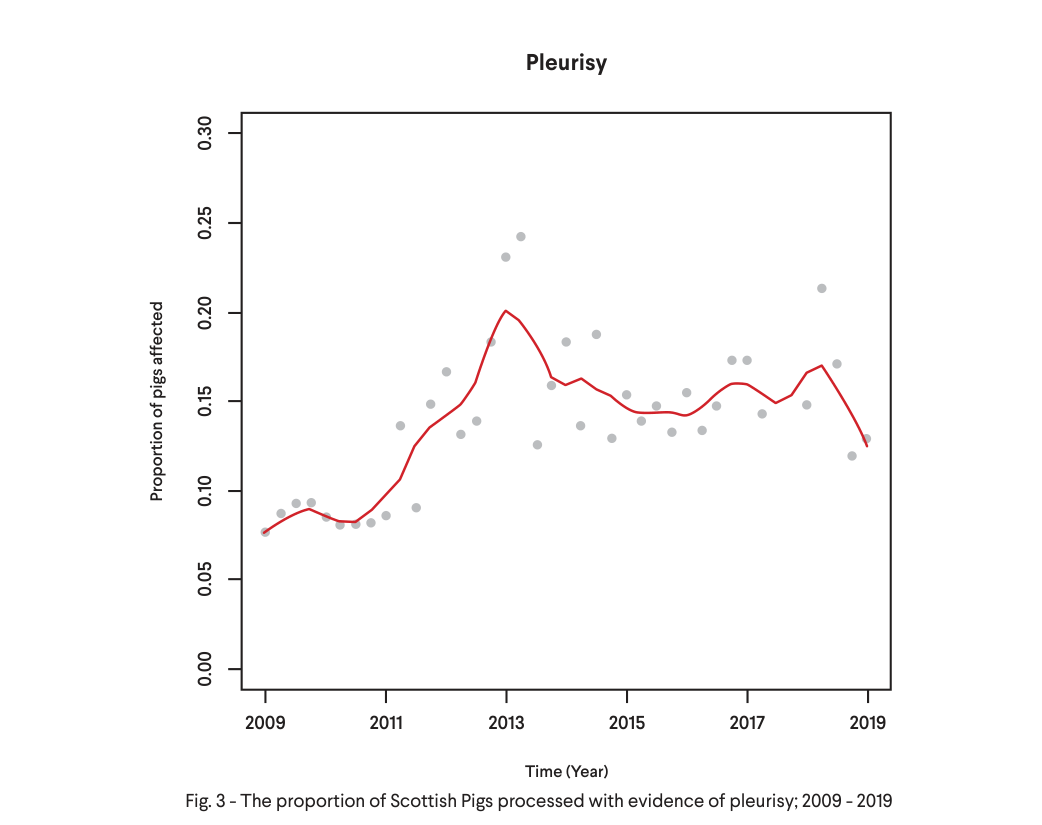
Pleurisy has been monitored through the Wholesome Pigs Scotland scheme for well over 15 years. Other chronic health problems have fallen over that time, but pleurisy has stayed stubbornly high because it has many contributing causes.
What causes it?
Pleurisy is multi-factorial. It is usually linked to respiratory infection, but the environment the pigs live in plays a major part.
Respiratory disease
Higher levels of pleurisy are seen where pigs carry several respiratory infections at once, including:
- Actinobacillus pleuropneumoniae (APP)
- Swine influenza
- PRRS
- Mycoplasma hyopneumoniae (enzootic pneumonia)
Management and environment
A 2008 study found that pleurisy risk goes up with:
- Not running strict all-in, all-out (AIAO) at unit or building level
- Pigs more than a month apart in age sharing the same airspace
- Repeated mixing of pigs after weaning
- Repeated moving of pigs, even without mixing
And risk goes down with:
- Filling wean-to-finish or grower-to-finish buildings from three or fewer sources
- Cleaning and disinfecting grower and finisher accommodation between groups
- Longer down time between batches
Our advice: fill wean-to-finish or grower-to-finish buildings from a single source where possible.
Poor ventilation, high humidity, unsuitable temperature, overstocking, high dust and ammonia levels, and stress have also all been linked to pleurisy.
What it costs
On farm, the losses come from slower growth (about 0.7 kg less carcase weight and 2.6 extra days to slaughter), extra feed, medication and higher deaths after weaning. At the processor, affected carcases are trimmed, lungs become waste, and batches with more than 10% pleurisy slow the line down.
What you can do on farm
1. Reduce dust
Dust comes from feed, skin, faeces and bedding. Fine particles under 3 µm reach deep into the lungs and put the pig’s defences under constant strain. As the brochure puts it: dirt dilutes defence.
- Maintain the mill: worn screens and hammers produce more fine particles
- Watch grain quality after a wet harvest, because mouldy grain produces very fine, biologically active dust
- Use good-quality straw and store it inside
- Use downpipes to reduce feed drop heights
- Keep pigs settled: high activity levels from cold, draughts, ammonia, overcrowding or mixing stir up dust
2. Control ammonia
| Ammonia (ppm) | Effect |
|---|---|
| 3–10 | Can be smelt. Not considered a problem. |
| 10–20 | Changes where pigs lie. Damages the cells that defend the upper airways. |
| 20–30 | Significant effect on the respiratory tract and health. |
- Reduce damp floor areas, inside and outside pens
- Keep at least 150 mm (6 inches) between the top of the slurry and the slats
- If tanks fill faster than expected, find out why: sediment from earlier batches, incomplete emptying, or extra dirty water
- Avoid long periods at low ventilation rates
Slurry safety
Mixing slurry before emptying a tank can release lethal concentrations of gas. Everyone must know the risks, and the actions needed to remove them, before slurry is agitated.
3. Get ventilation right
You need to control not just how much air comes in, but where it comes in. Air leaking through gaps, missing back-draught shutters or open doors causes draughts and disturbs lying behaviour.
A leaky building loses heat, so it takes longer to reach the temperature that turns the fans on. It then spends longer at minimum ventilation, and air quality suffers. Ask yourself two questions:
- Are the minimum ventilation settings correct and working?
- Is the building running at minimum ventilation for longer than it should?
Routine maintenance of inlets and outlets, and fixing problems promptly, make a big difference. More ventilation = more clean air = less pressure on the lungs.
4. Think about effective stocking density
Pen area divided by number of pigs doesn’t tell the whole story. Pigs can’t lie in the busy areas around feeders and drinkers, or in parts of the pen that are cold, draughty, damp or high in ammonia. The PL2020 project suggests working out the area pigs can actually lie in:
Effective area = pen area − feeder − 1 m in front of feeder − drinker area − cold/draughty area − area over 10 ppm ammonia
Higher target finishing weights put extra pressure on pens where pig numbers haven’t been reduced, especially in winter.
5. Clean properly between batches
- Allow enough time. Cleaning only works if there’s time to do it properly, including feeders, drinkers and ventilation.
- Pre-soak. Automatic soaking systems pay for themselves. One system covering 9 rooms cost about £1,700.
- Remove biofilm with a detergent (de-greaser) or steam. Cold water and disinfectant alone won’t shift it, and it protects bacteria and viruses.
- Disinfect at the correct dilution and leave it on for the full contact time.
- Let everything dry before restocking.
Poor hygiene keeps the pig’s immune system working constantly, using up 6–9% of its energy intake that would otherwise go into growth.
Project partners
PL2020 was funded by the Scottish Government. Thanks go to the producers and staff of the 12 project farms, and to contributors from Scottish Pigs, QMS, SRUC, the University of Aberdeen, Pilgrim’s Pride, Agrosoft, PigNomics, Cinecosse and Arato Systems. Findings were collated by Jamie Robertson, Livestock Management Systems Ltd (March 2021).
See also: Biosecurity · PRRS · Swine dysentery
The PL2020 project
PL2020 was a Scottish Government-funded project investigating pleurisy on 12 Scottish farms. It brought together producers, processors and researchers. The findings and practical advice are summarised above.