Biosecurity
Practical measures to keep disease out of your unit and stop it spreading.
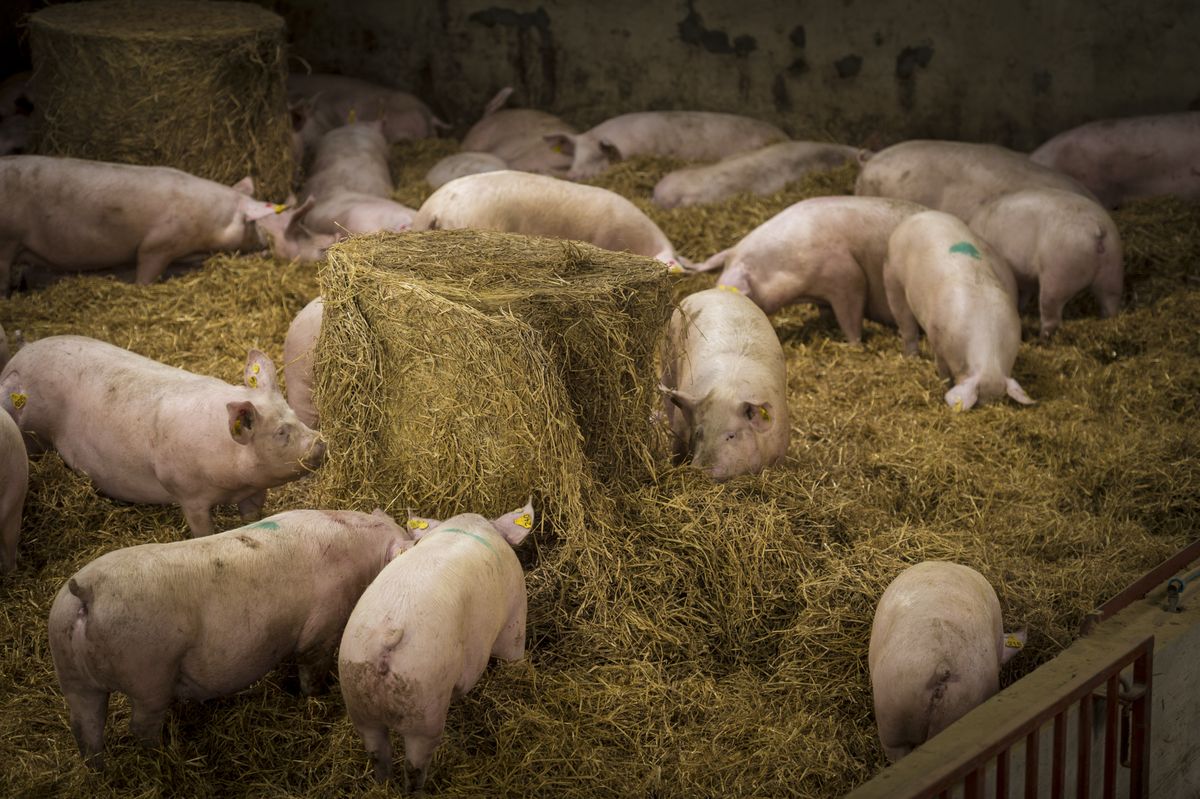
Good biosecurity is the single most effective way to protect a pig unit from disease. It is absolutely integral to controlling PRRS and the same measures can help protect against swine dysentery, enzootic pneumonia, and exotic threats such as African Swine Fever.
Biosecurity in practice: four focus areas
Through the PCES programme, training and materials for Scottish farms focus on four areas where audits found the biggest risks.
1. Line of separation
Set up, then keep, a clear line between the “clean” (pig) side and the “dirty” (outside) side of the farm. Nothing crosses it without being cleaned, changed or disinfected.
2. Farm perimeter
Control farm entry and the car park. Manage visitors and keep vehicles away from the clean area.
3. Changing area
Lay out changing facilities so people can’t cross from dirty to clean without changing. A simple “Danish entry” design, with a physical bench barrier, works well.
4. High-risk routes
Understand how disease actually gets in – pigs, people, vehicles, deadstock, equipment – and put a control on each one.
What PRRS-negative farms do differently
An analysis of Biocheck.UGent audits from 105 Scottish indoor pig farms (Cara Cruickshank, Royal (Dick) School of Veterinary Studies, presented to the Pig Veterinary Society in April 2026) compared PRRS-positive and PRRS-negative herds. These practices were significantly more common on negative farms:
- Deadstock: handling dead pigs with single-use gloves or washing and disinfecting hands afterwards. One in five positive farms never did this, compared with fewer than 1 in 50 negative farms.
- Soaking: soaking pens and compartments with water before washing
- Loading areas: cleaning and disinfecting loading bays and corridors after every pig movement
There was also a trend towards better results for farms that:
- clean and disinfect the deadstock storage area after each use
- make sure every farm worker follows the hygiene rules
- have a protocol for cleaning and disinfecting equipment after use
This was a first analysis based on a questionnaire and a snapshot of PRRS status, with a limited sample size. Further analysis over time is planned as the programme continues.
Biosecurity audits (Biocheck.UGent)
PCES uses the Biocheck.UGent system, completed by your herd vet, to score external biosecurity (keeping disease out) and internal biosecurity (stopping spread within the farm). Your score shows how your unit compares and where to improve.
Each type of unit tends to have its own weak spots. Breeding and farrow-to-finish units often score well on external biosecurity but less well inside the farm, while finishing and weaner units tend to show the opposite. Larger units also tend to score lower on internal biosecurity. Look at both parts of your score, not just the total.
Beyond the farm gate
Disease doesn’t respect farm boundaries. A 2019 biosecurity workshop brought together 60 people from haulage, processing, contracting, feed companies, government and assurance schemes. They made recommendations in four areas:
- Facilities: vehicle wash facilities at processing sites, controlled vehicle entry points at pig units, and proper provision for people entering units
- Education: making sure cleaning and disinfection information reaches staff at every level of businesses serving the pig sector
- Assurance and enforcement: more focus on biosecurity in assurance schemes, with follow-up to check standards are met
- Communication: openness and information-sharing – for example, so feed companies can plan routes that visit infected premises last
PCES has since audited hauliers. Standards were generally high, with the main concern being cross-contamination of lorries at some abattoirs and haulier yards. The programme now funds a cleansing and disinfection technician at the Brechin abattoir, the highest-risk point in the Scottish pig supply chain.
Key PRRS risk routes
- Pigs – incoming stock is the highest risk. Source from known-health herds, and quarantine all incoming stock and test before introduction to the main herd.
- People – visitors, staff and contractors. Use a single clear entry point, a visitor log and farm-specific clothing and boots.
- Vehicles – delivery lorries and feed wagons. Keep them off the clean area. Any vehicles which do have to enter the clean area must be thoroughly cleaned and disinfected before entry.
- Loading bay – trucks must remain outside the clean area. Farm staff must not enter the truck and hauliers must not enter the farm clean area. Any outgoing pigs which have had contact with the truck must not be allowed back onto the farm.
- Feed and food – never feed kitchen or catering waste. Keep pork products away from pigs.
- Wildlife, vermin and birds – while not proven to be PRRS risks, maintaining fences, adequate pest control and bird-proofing can help to exclude other diseases.
- Equipment – clean and disinfect anything brought onto the unit, including equipment shared between your own units.
- Deadstock – collection vehicles must be kept off site. Handle deadstock with gloves, and clean and disinfect storage after use.
For thorough cleaning between batches – pre-soaking, removing biofilm, correct disinfectant use and drying – see the Pleurisy page.
Biosecurity standard operating procedures
These standard operating procedures from AHDB were written for PED, but set out good biosecurity practice for all pig diseases. They open on the AHDB website.
- SOP 3: Biosecurity principlesWord · 2026
- SOP 4: Farmgate biosecurity – peopleWord · 2026
- SOP 5: Farmgate biosecurity – vehiclesWord · 2026
- SOP 6: Line of separation and loading pigsWord · 2026
- SOP 7: Cleaning and disinfection of vehiclesWord · 2026
- SOP 9: Considerations for fallen stock disposalWord · 2016
- SOP 11: Intensive cleaning and disinfection of units following a PED breakdownWord · 2016
- SOP 12: Considerations for manure managementWord · 2016
- SOP 14: Biosecurity briefing for the allied pig industryWord · 2016
The full set of PED SOPs, including reporting and containment, is on our PED page.
Bitesize Biosecurity
Bitesize Biosecurity is an online tool from SRUC that offers AI-curated biosecurity advice.
Signs and training materials
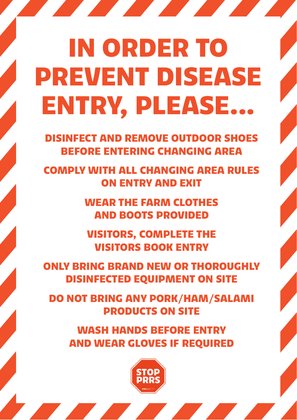
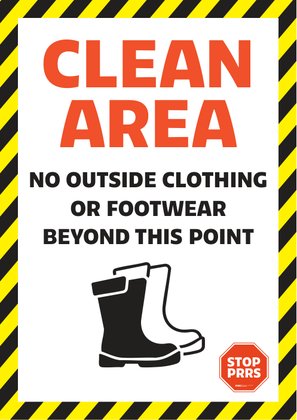
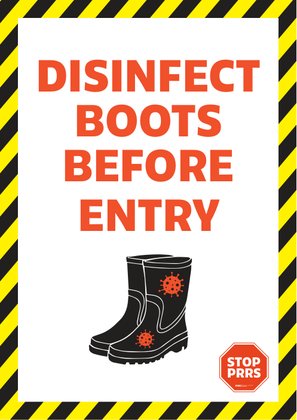
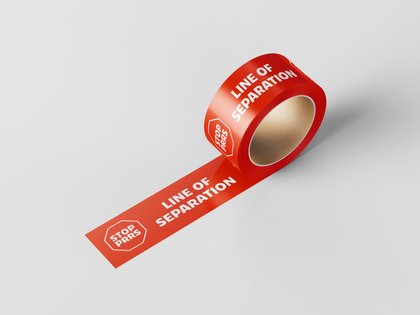
Farm signs, posters, line of separation tape and staff training materials are available through the PRRS Control & Elimination Scotland (PCES) programme. They support the practical measures on this page.

See all signs and training materials
All are available to order from vet@scottishpigs.org.uk.