Welfare
Work to improve the welfare of pigs in Scotland.
Scottish SPCA
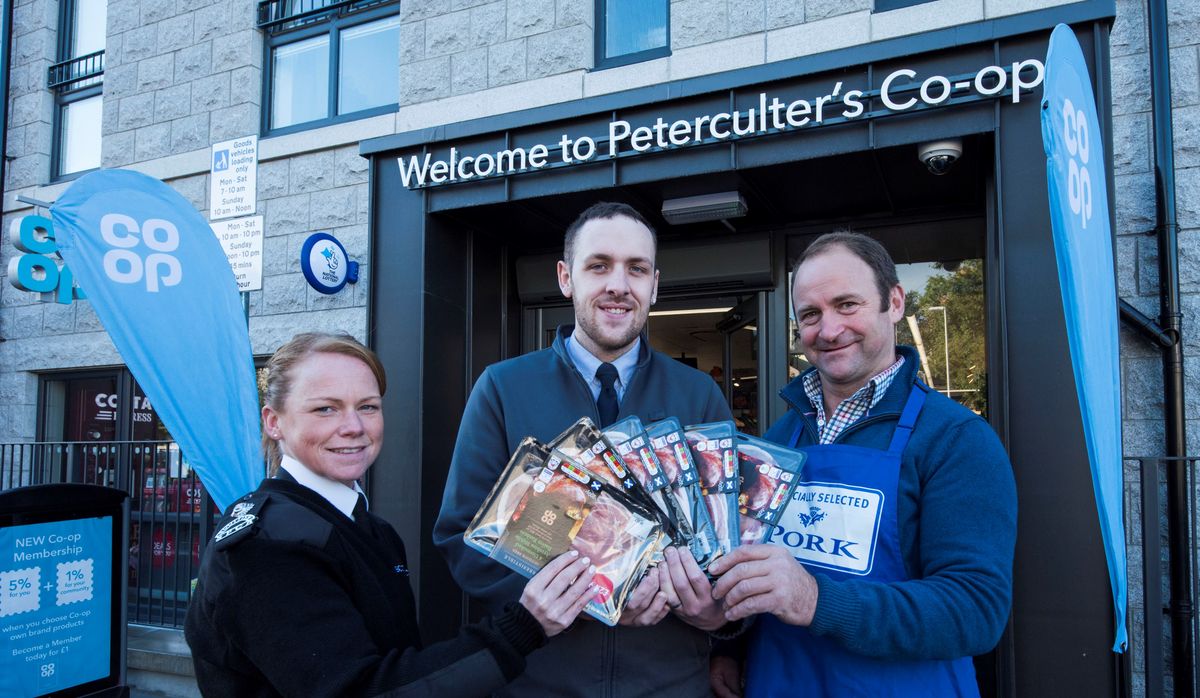
Recognising that high animal welfare standards are very important to consumers, Scottish Pigs was instrumental in developing the groundbreaking partnership with the Scottish Society for Prevention of Cruelty to Animals.
For more than 20 years, our farms have been regularly visited by Scottish SPCA inspectors to provide comprehensive and independent verification of welfare standards and are then eligible to use the ‘Approved by Scottish SPCA’ logo on retail packs.
All farms are also assured by the Quality Meat Scotland or Red Tractor assurance schemes.
Adaptive farrowing
Source: Free Farrowing (freefarrowing.org)
This section is a short summary of information from freefarrowing.org. The website’s content was collated by scientists at SRUC (Scotland’s Rural College) and Newcastle University, and it is managed by SRUC. Please visit it for full details, research and farmer resources.
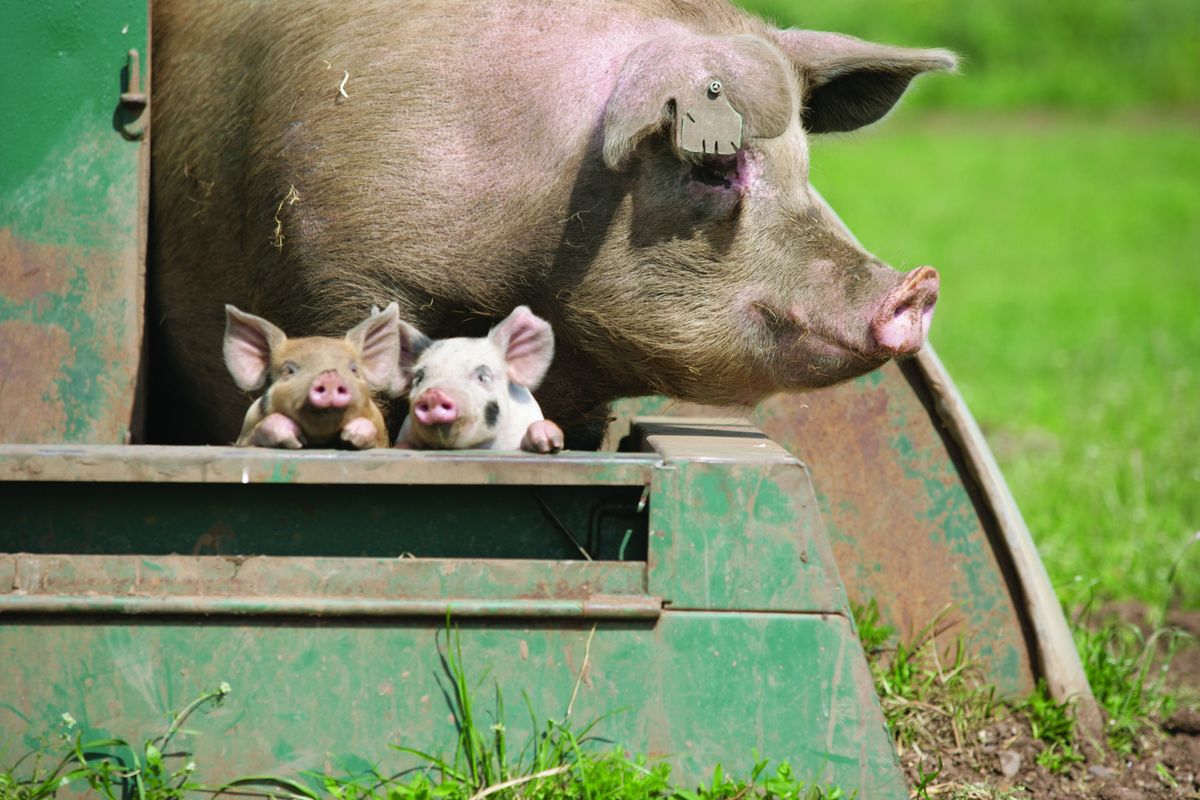
“Adaptive” or “free” farrowing means keeping the sow loose, or only briefly confined, during farrowing and lactation, instead of in a conventional farrowing crate for the whole period.
Why it matters
Farrowing crates were introduced in the 1960s to stop sows crushing their piglets. They are economical, space-saving, hygienic and safe for stockpeople. But they stop the sow turning around, and they stop her building a nest. Nest-building is a strongly motivated behaviour that hasn’t changed through domestication. It prepares the sow hormonally for farrowing, and a calmer farrowing helps piglets reach the udder and get colostrum.
The challenge is to give the sow more freedom without losing piglet survival. Well-designed loose systems on some farms have matched the production results of crates.
The main options
Zero-crating pens
The sow is loose throughout, in a pen designed to protect piglets, e.g. PigSAFE, Danish Free Farrower, Comfort Pen.
Temporary crating
The sow is confined only around the first few days of life, when piglets are most at risk, then the crate opens up, e.g. SWAP, Pro Dromi, 360° Freedom Farrower.
Group systems
Sows and litters are housed together in multi-suckle groups.
Outdoor systems
Huts or arks in individual paddocks, already widely used in Scotland.
Kennel and run
Indoor huts or pens with access to an outdoor run.
Compare farrowing systems on freefarrowing.org →
Piglet survival
Most piglet deaths happen at birth or in the first 72 hours, mainly through stillbirth, starvation or crushing. Crated systems tend to see more stillbirths and starvation, and loose systems more crushing. So good pen design, sows with good maternal behaviour, and skilled, calm stockmanship are all important in loose systems.
The rules are changing
Sweden, Switzerland and Norway already ban farrowing crates. Austria, Germany, Finland, Denmark and New Zealand are phasing them out. In December 2025 the UK Government announced that farrowing crates would be banned in England, with details to follow in 2026.
In Scotland, the Scottish Government remains committed to consulting on phasing out farrowing crates, ideally in coordination with the other UK administrations given the UK-wide nature of the trade.
For farmers thinking about a change
freefarrowing.org has practical resources:
- Free farrowing checklist – top-level things to consider
- Pen design pre-build checklist – questions to work through before you build
- Free farrowing husbandry – tips from farmers managing loose sows
- Free farrowing economics – including an interactive costing model
- Know the rules – legislation and assurance scheme requirements
Information in this section is summarised from Free Farrowing (freefarrowing.org), © Free Farrowing. Website concept and content collated by scientists at SRUC (Scotland’s Rural College) and Newcastle University; website managed by SRUC. Used with acknowledgement.